
Arrest History in Charlotte County
Charlotte County arrests may begin with the Charlotte County Sheriff's Office, Punta Gorda Police Department, Florida Highway Patrol, or another state or federal officer with authority. Punta Gorda is the county's only incorporated municipality and has its only municipal police department. Outside the city, CCSO is generally the local law-enforcement route.
An arrest history can include an agency report, probable-cause material, booking entry, bond or hold, release, and any later court filing. Those products are linked but not interchangeable. The official CCSO homepage is the starting point for sheriff and jail services.
The sheriff's official site routes readers to custody and records tools without turning a booking screen into proof of guilt.
CCSO Local Arrest Database
The CCSO Local Arrest Database wraps the county's current-booking portal. It is the quickest official place to start for a recent Charlotte County booking. The live interface may be protected or unavailable, so no unverified field or update schedule should be assumed.
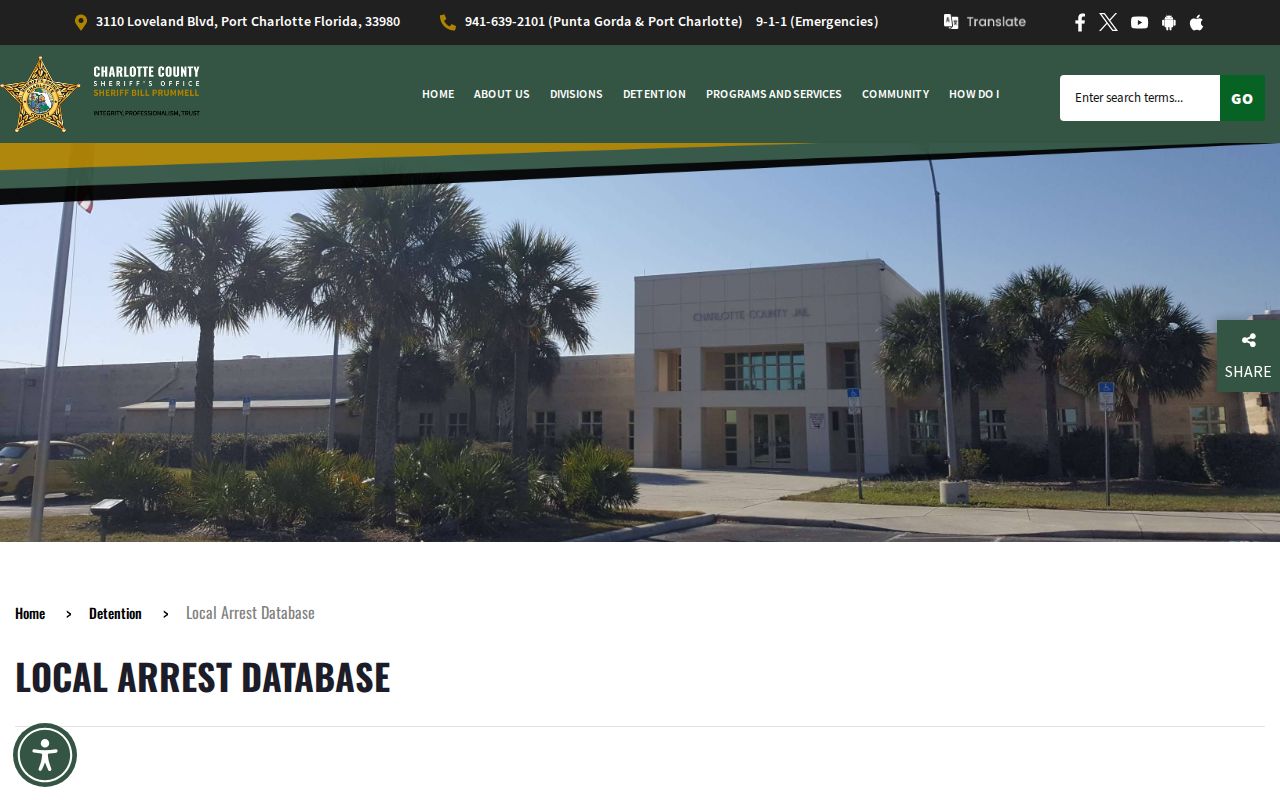
The wrapper confirms the official route; if it fails, call the jail or request the specific booking record rather than treating an empty screen as no arrest.
How to Look Up Charlotte County Arrests
Start with the source closest to the event, then follow the record into custody, court, and statewide systems. Use a full name, approximate date, arresting agency, location, and booking, report, or case number when known. Each step answers a different question.
- Check the CCSO Local Arrest Database or direct current-booking portal for recent Charlotte County custody.
- Call Charlotte County Jail at 941-833-6300 when the roster is down or current custody needs confirmation.
- Request the arrest narrative from CCSO JustFOIA or, for a city arrest, the Punta Gorda Police records portal.
- Search Clerk Benchmark by Last, First and criminal court filters for filed charges and the final disposition.
- For statewide history, use FDLE CCHInet or the no-fee fingerprint Personal Review for one's own record.
Current Charlotte Booking Search
The direct Charlotte booking portal serves current or recent jail records. A roster tends to answer whether someone is booked now, not whether that person was ever arrested. Entries may roll off after release or transfer, and a prosecutor may not yet have filed a case.
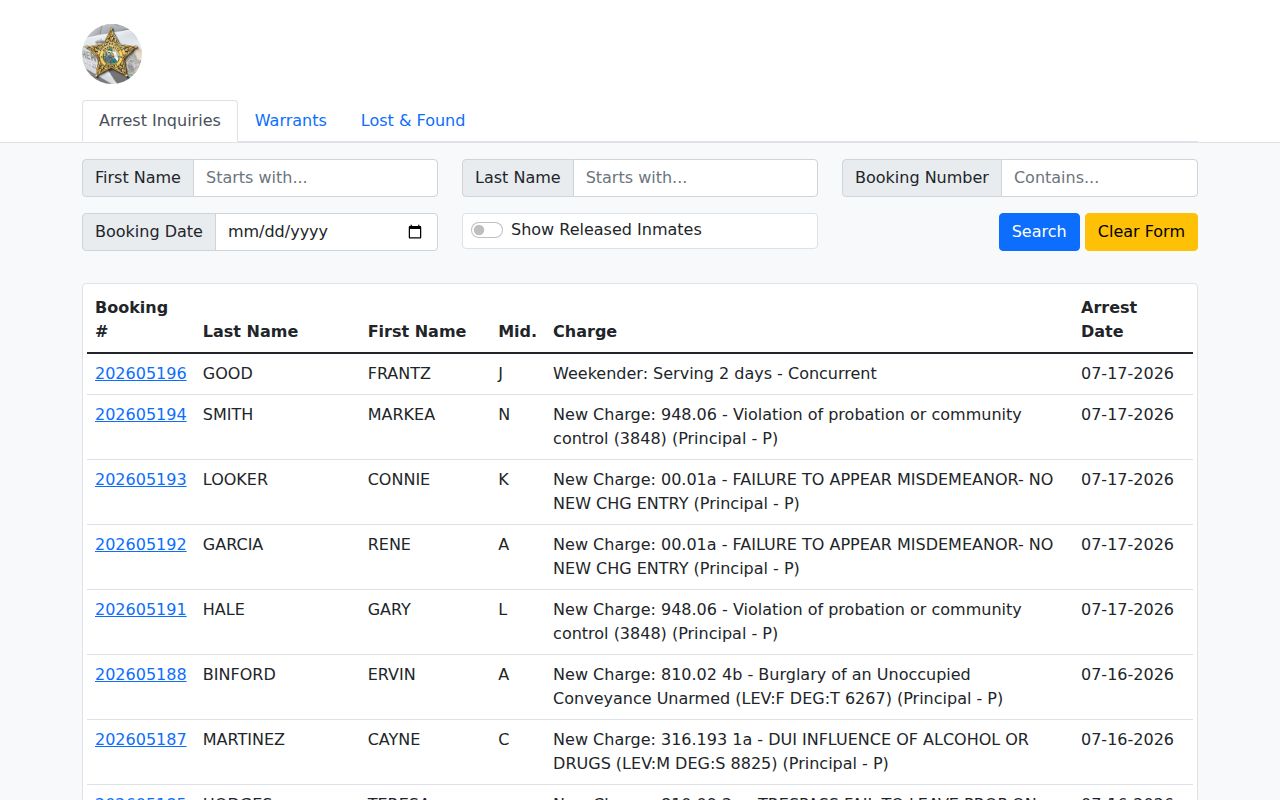
The current-booking screen is one time-limited view in the Charlotte County arrest trail, so preserve any booking number for later agency and court requests.
What an Arrest Record Shows
A Charlotte County arrest record may state when and where the arrest occurred, which agency and officer acted, the alleged charge and statute, probable-cause facts, warrant basis, booking number, bond or hold, and release. The jail may also create fingerprints and a booking photograph. Public visibility depends on Florida confidentiality and exemption rules.
| Booking Number | Local identifier that helps CCSO locate custody records. |
|---|---|
| Booking Date & Time | When detention personnel entered the person into the jail system. |
| Arresting Agency | Identifies who owns the incident or arrest narrative. |
| Charges | Booking allegations that may change after prosecutor review. |
| Bond | Amount or release condition by charge, subject to later court action. |
| Booking Photograph | May be requested if releasable; a photograph is not proof of guilt. |
| Release Status | Custody exit, transfer, or release, not the court disposition. |
Inside Charlotte County Jail
Charlotte County Jail opened in February 2001 and was designed for 1,074 people. Its direct-supervision model places officers inside housing units of up to 64. Detention staff establish identity, inventory property, screen the arrested person, photograph and fingerprint the person, enter allegations and holds, and classify housing.
The official correctional facility page describes the jail's design, services, and video courtroom.
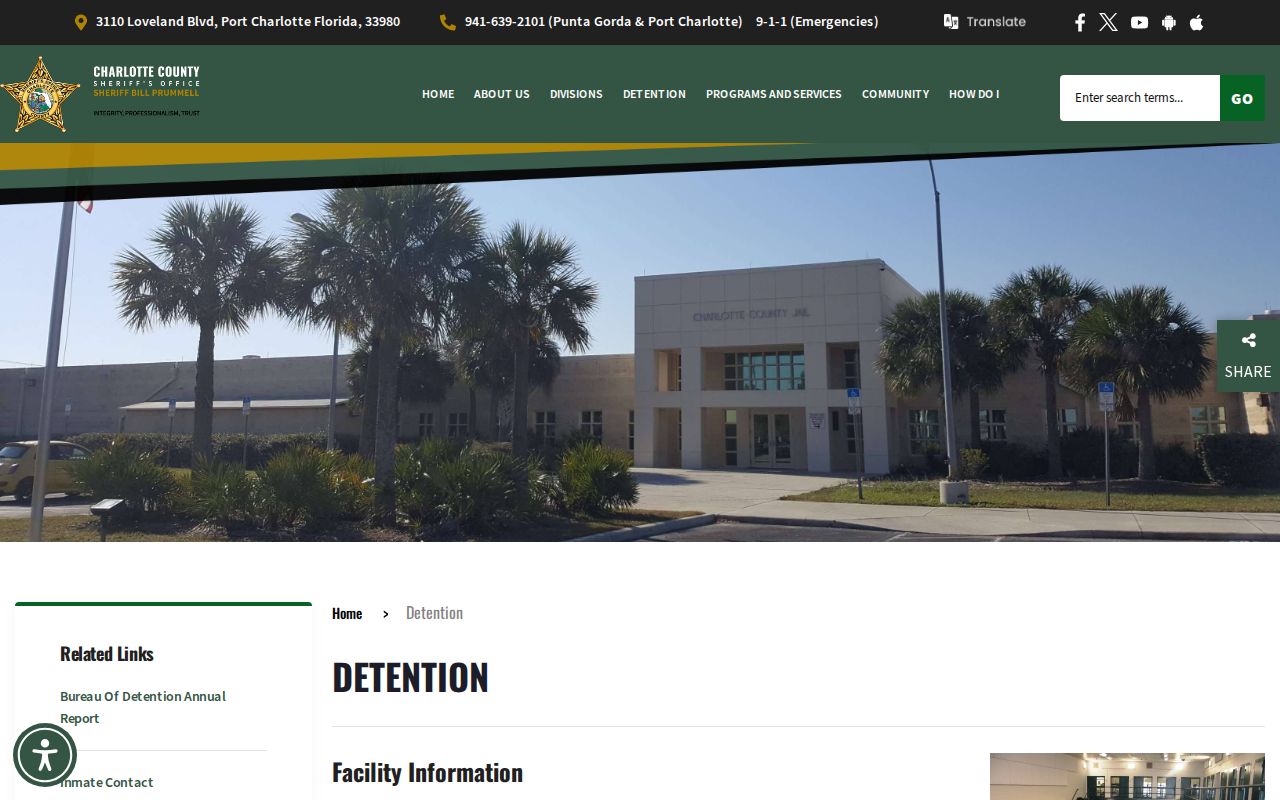
The video courtroom permits first appearances, arraignments, and bond hearings from the jail, which can place an early court event on the docket before transport.
Recent Arrests and Booking Logs
CCSO publishes the Local Arrest Database and a direct booking portal for recent Charlotte County custody. Because live inspection encountered protection controls, readers should verify current labels and status in the interface rather than rely on a fixed list. Expected booking categories include number, date, agency, charges, bond, custody, and release, but only fields actually shown should be treated as confirmed.
A recent roster is not a lifetime arrest index. Release, transfer, and ordinary portal retention can remove a person from the current view. A new arrest may also precede the Clerk case. When the portal is unavailable, the jail line and formal records request are the documented fallback routes.
Requesting a Charlotte Arrest Affidavit
For an older booking or the underlying affidavit, use the CCSO public-records directions. Address a mailed request to Custodian of Public Records, Charlotte County Sheriff's Office, 3110 Loveland Boulevard, Port Charlotte, FL 33980. The main line is 941-639-2101, and the published inspection window is 8 a.m. to 5 p.m.
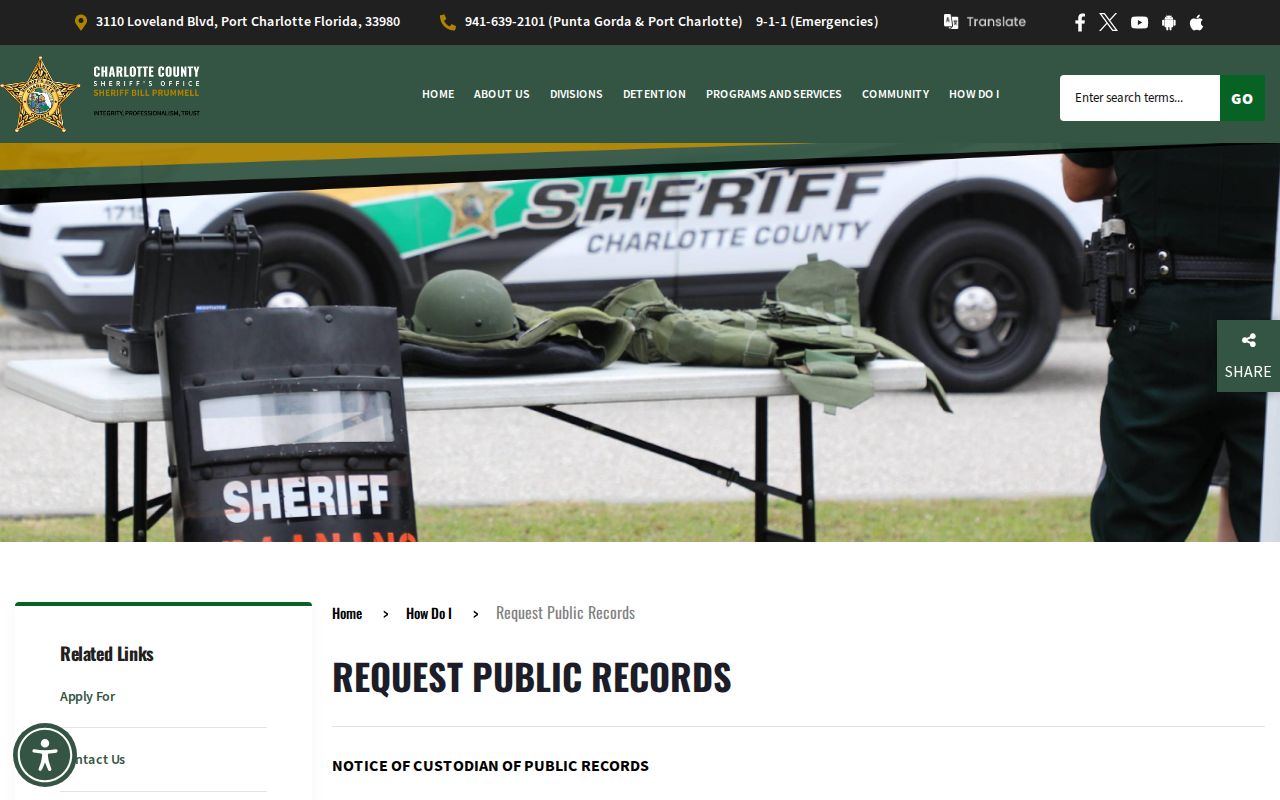
The directions explain that CCSO reviews responsive material and removes exempt or confidential information before release.
CCSO Public Records Custodian
Records Supervisor Kerri Towsey
3110 Loveland Boulevard
Port Charlotte, FL 33980
941-639-2101
Inspection: 8 a.m.-5 p.m.
Using the CCSO JustFOIA Portal
The formal online route is the Charlotte County Sheriff JustFOIA portal. Give the incident or booking number when known, an approximate date and time, location, involved agency, and desired format. Ask separately for an incident report, arrest affidavit, booking sheet, CAD history, releasable photograph, 911 audio, or body-camera footage because they are distinct records.
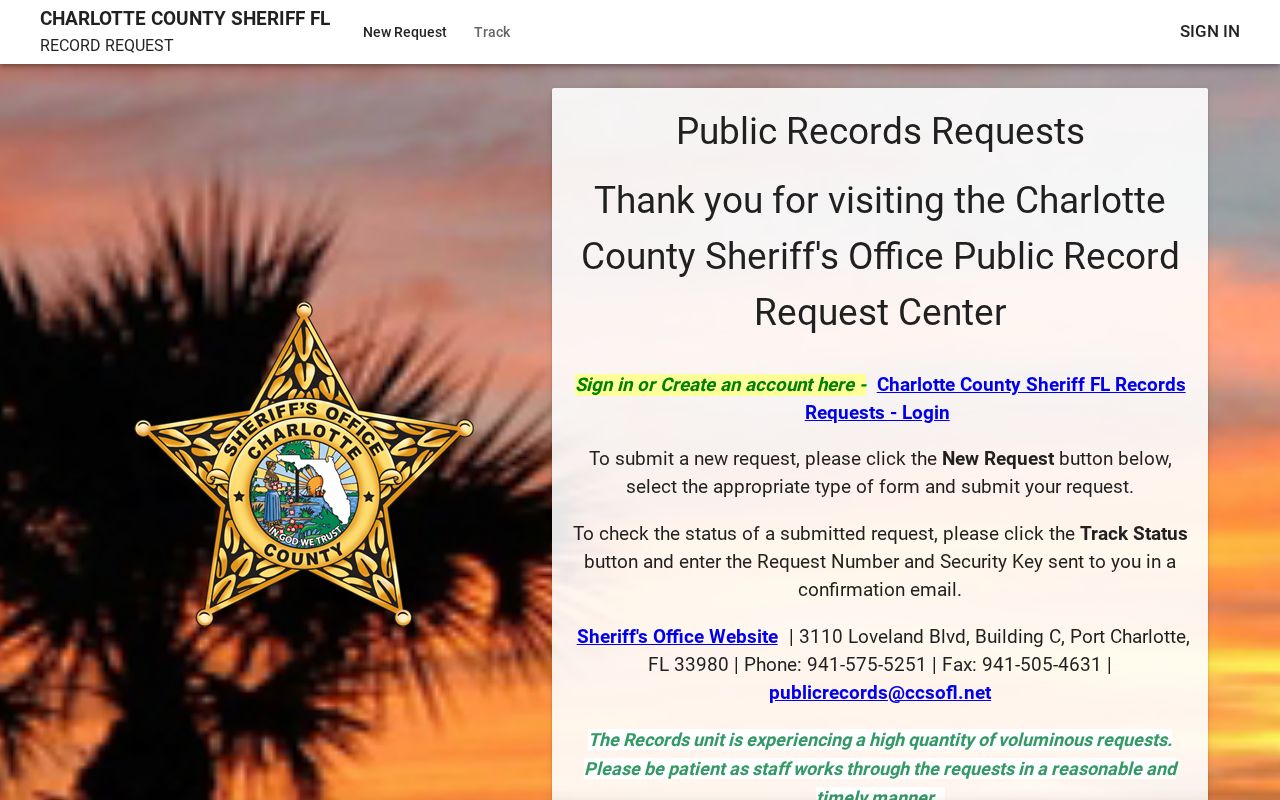
A precise request helps the custodian find the right Charlotte County arrest material and apply the correct exemption review.
How Bookings Reach FDLE
Jail fingerprinting normally links a Charlotte County booking to Florida's statewide repository. The arresting or booking agency reports the event, and later court dispositions move back toward FDLE. A Notice to Appear, direct filing without fingerprinting, or delayed disposition report can make the statewide history look incomplete.
FDLE CCHInet offers a paid public name search, but it is not fingerprint-confirmed and does not replace the Charlotte docket. For one's own record, FDLE's no-fee Personal Review uses fingerprints and supports a challenge to inaccurate or incomplete Florida data. LiveScan providers serve checks authorized by statute; their ORI, appointment, and price depend on purpose.
Punta Gorda Arrests Reach CCSO
Punta Gorda Police keeps the city incident and arrest narrative, but every person it arrests is transported to Charlotte County Jail. The city does not advertise a separate public holding roster. Request the police narrative through the PGPD records portal at pgpdrecords.com, then use the CCSO booking system for custody and Benchmark for any filed County Court or Circuit Court case.
This three-office route prevents a common mistake: finding no city jail screen and concluding that no arrest record exists. The city agency explains the encounter, the county jail documents booking and release, and the Clerk shows whether the State Attorney filed a charge and how it ended.
Restricted Charlotte Arrest Details
Florida access law is broad, but it does not make every part of an arrest file public. Juvenile arrest information is generally confidential, subject to limited statutory felony-equivalent release. Victim identity, active investigative material, private body-camera settings, medical information, protective-custody data, and safety-sensitive jail details may be withheld or redacted.
If CCSO withholds responsive material, section 119.07 requires the custodian to identify the legal basis. A redaction does not mean the whole Charlotte County arrest is sealed, and a public booking line does not waive protection for a different report or recording.
Arrests vs Convictions
A Charlotte County arrest record proves that an agency took a person into custody or recorded an arrest event. It does not prove guilt. A conviction requires a court outcome. To learn what happened after booking, match the person and date to the Charlotte County criminal court case and read the disposition by count.
| Arrest Record | Conviction Record |
|---|---|
| Created by the arresting agency and jail | Created through the Charlotte County court case |
| Shows an arrest or booking occurred | Shows a finding or plea of guilt |
| Lives with the agency and CCSO custody system | Lives with the Clerk and may report to FDLE |
| May be followed by release, no-file, or dismissal | May be followed by sentence, appeal, or eligible relief |
Note: An arrest is not proof of guilt; a booking may lead to no filed charge, dismissal, or acquittal.