
How to Check Criminal History in Charlotte County
Begin with the Charlotte County Clerk's free Benchmark Case Search when the goal is to see filed charges, docket activity, or the final court result. Use the Sheriff's Local Arrest Database for a current booking, and use the Florida Department of Law Enforcement when a statewide reported history is needed. A full name and exact date of birth help separate people with similar names. Search alternate spellings or former names when the record may use them.
The most reliable method follows the event through its custodians. An agency report explains the encounter. The jail file shows custody. The Clerk records the prosecution, and FDLE assembles reported fingerprint-linked cycles. Use certified documents or a fingerprint Personal Review when identity or legal accuracy matters.
- Search Benchmark by name, case number, or citation and select the relevant felony, misdemeanor, traffic, or ordinance court type.
- Check the Local Arrest Database for a recent Charlotte County booking that may predate a filed case.
- Read the docket and each count's disposition, not just a broad open or closed label.
- Request the report, affidavit, or booking sheet from CCSO when the public screen lacks the needed detail.
- Use FDLE CCHInet for a Florida name search, or Personal Review for fingerprint-based review of your own state record.
Four Charlotte County Record Systems
The same incident can create four related records with different facts and dates. Confusing them is the most common search error. A booking allegation may change when the State Attorney reviews the case. The Clerk's disposition may reach FDLE later, and a report can exist even when no arrest occurs.
| Official channel | Best use | Key limit |
|---|---|---|
| CCSO or Punta Gorda Police | Incident and arrest reports | Not the final court outcome |
| Charlotte County Jail | Booking and current county custody | Not proof of guilt |
| Charlotte County Clerk | Filed charges, docket, orders, disposition | Local cases only |
| FDLE CJIS | Reported statewide criminal history | Name search is not fingerprint verified |
The Charlotte Clerk portal hub shows how the county routes readers to court and official-copy services.
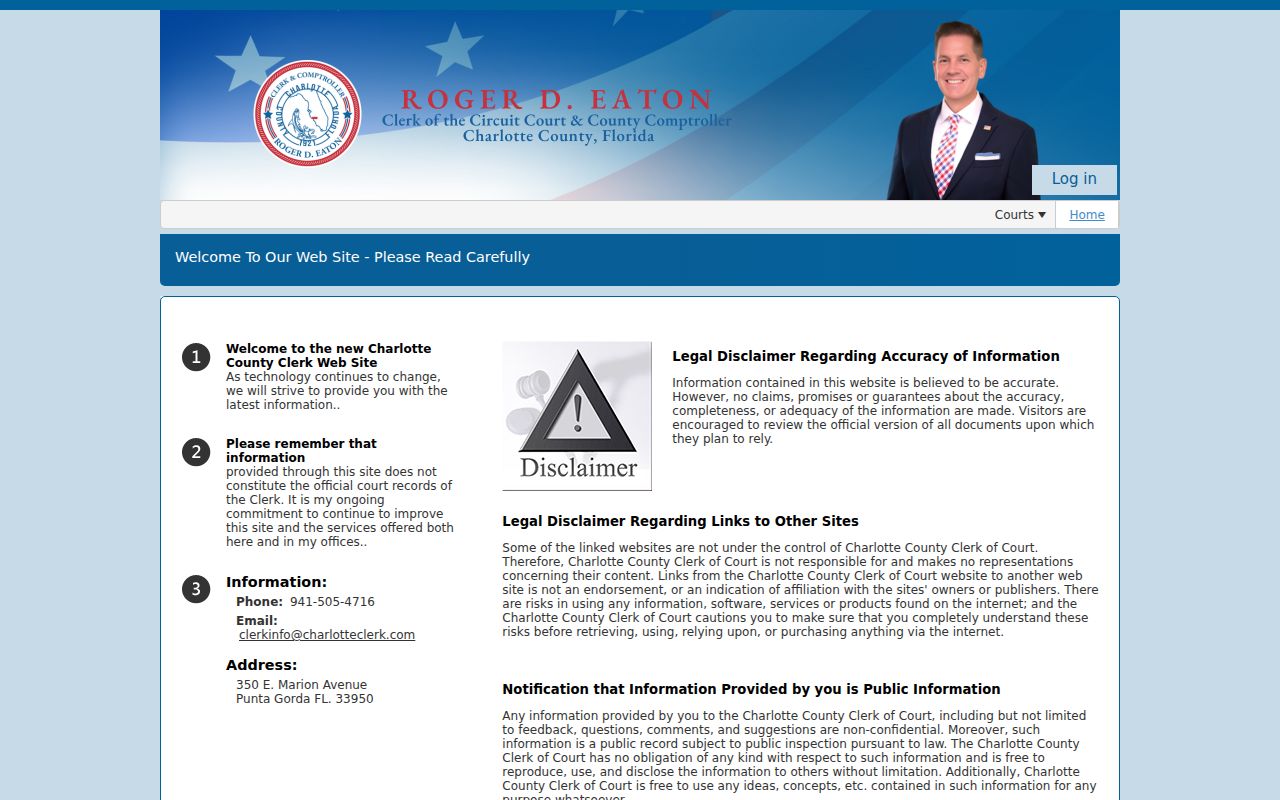
That hub is a starting point for local court material, while sheriff and FDLE products remain separate.
Official Florida Background Checks
The Florida Department of Law Enforcement, Division of Criminal Justice Information Services, is the central state repository. Its public Instant Search is a demographic, Florida-only check. The result is available at once to print or email, but it is not certified and does not establish identity through fingerprints. FDLE also accepts staff-processed certified and non-certified demographic searches.
The FDLE check-options page distinguishes the available products and their official uses.
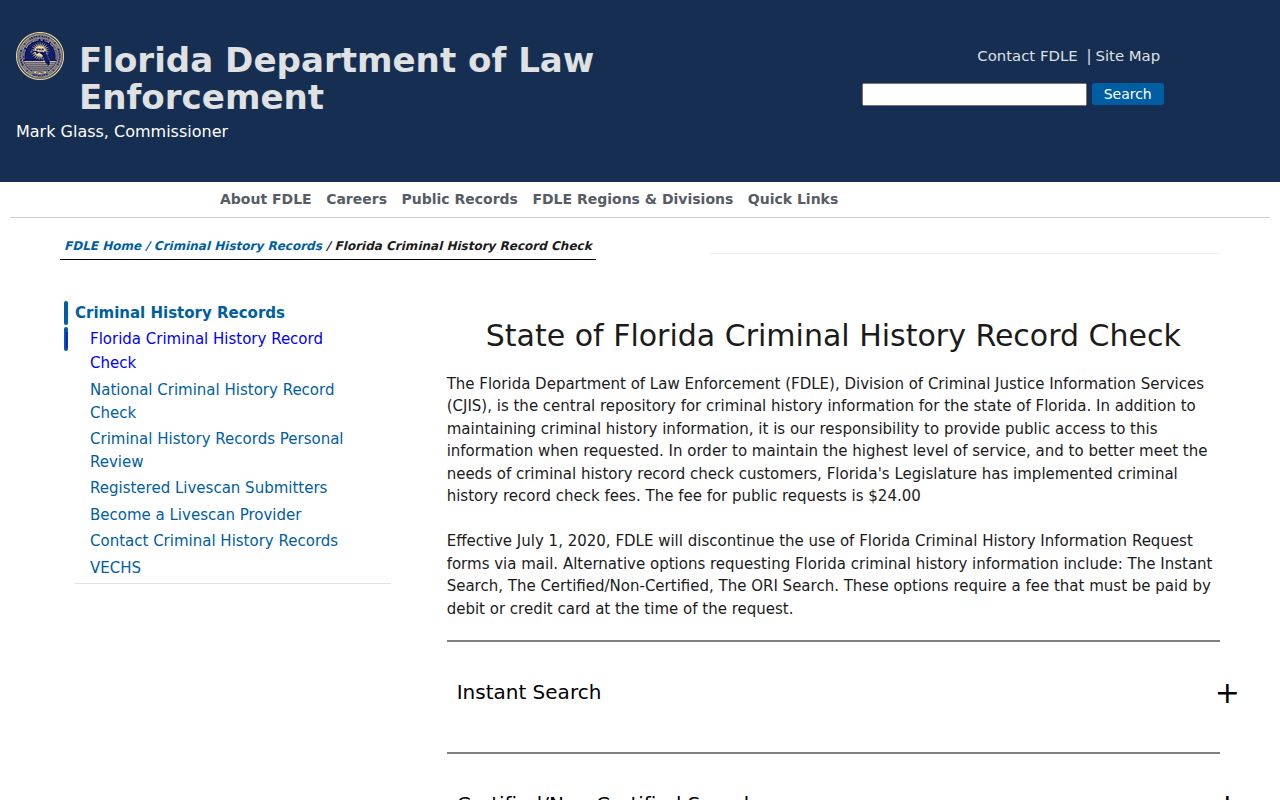
The right product depends on whether the reader needs a public name result, a certified response, or review of their own fingerprint-linked file.
| Instant Search | $24 plus a $1 card-processing fee; immediate, non-certified Florida name search. |
|---|---|
| Staff Search | $24 for certified or non-certified demographic processing; mailing time is additional. |
| Personal Review | No FDLE fee; fingerprints required; limited to the subject or designated attorney. |
| FBI Summary | $18 subject-only federal fingerprint history; channeler fees may add to the cost. |
Charlotte County CCHInet Name Fields
FDLE CCHInet requires last name, first name, date of birth, race, and sex. Middle name and other names used can improve matching. A Social Security number is optional and sensitive. Compound surnames follow FDLE's entry rules, including omitted spaces while retaining a hyphen when applicable.
The official CCHInet form displays the demographic entry screen.
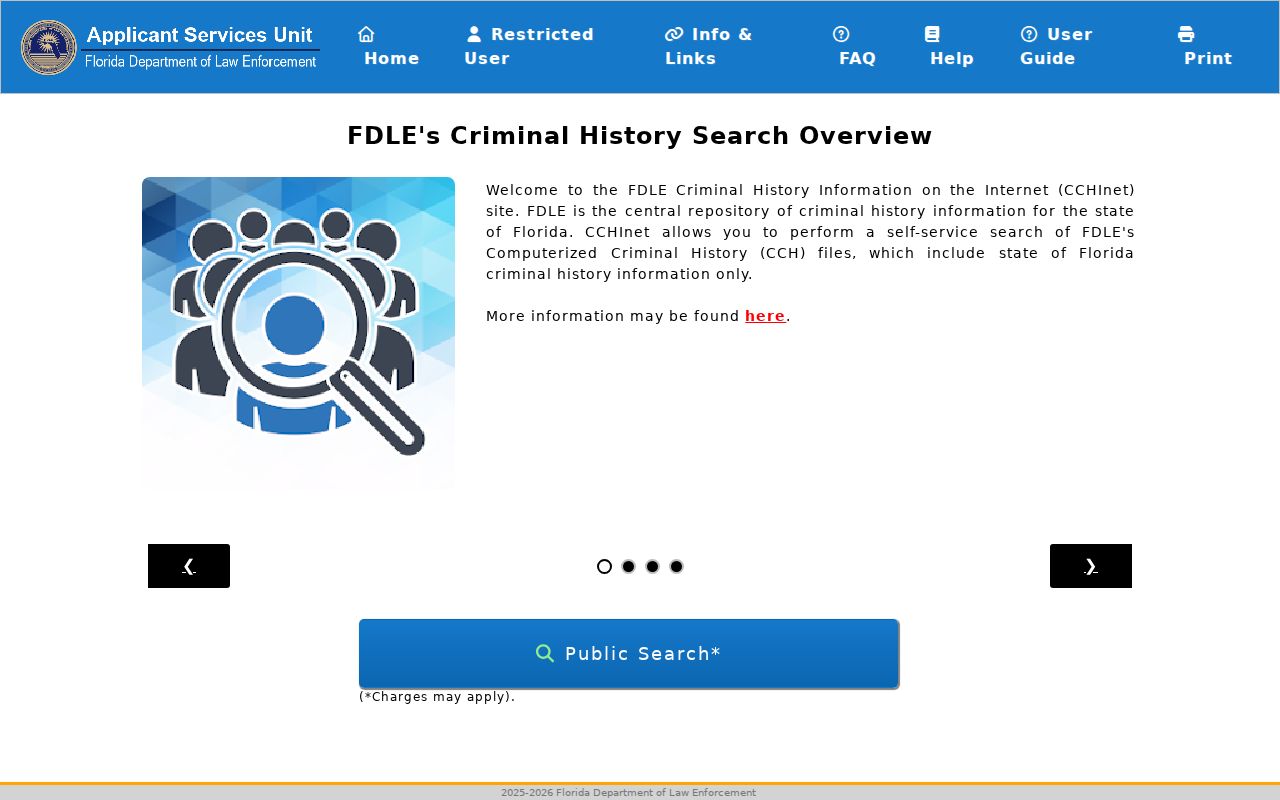
Because the result depends on entered demographics, compare any apparent match with the Charlotte County court file before drawing a conclusion.
| Field | Status | Search note |
|---|---|---|
| Last and first name | Required | Use official spelling |
| Date of birth | Required | Exact date narrows identity |
| Race and sex | Required | Use listed demographic values |
| Middle or other names | Optional | Helps find aliases |
| Social Security number | Optional | Sensitive identifier |
Types of Criminal Records
Charlotte County criminal records differ by the act each office documents. An incident report can exist without an arrest. A jail entry proves custody, not guilt. The court file can show charges different from those alleged at booking, and an FDLE history can be incomplete when a disposition has not yet been reported.
- Incident or offense report: the agency narrative, event details, evidence references, and involved people, subject to redaction.
- Arrest and booking file: arrest facts, intake data, charges, bonds, and custody status maintained by law enforcement and the jail.
- Criminal case file: complaint or information, hearings, motions, orders, disposition, and sentence kept by the Clerk.
- Warrant information: court and law-enforcement data that requires current confirmation.
- Corrections or registry record: state custody, supervision, or statutory registration information, not a full local case file.
Federal matters are separate. Charlotte County falls in the Middle District of Florida, Fort Myers Division, where PACER and the federal Clerk hold case records.
Charlotte County Warrant Inquiry Limits
The CCSO warrant inquiry is not a real-time warrant database. Its form asks for requester contact details, the subject's first and last names and birth date, a reason for the request, and an acknowledgment. CCSO says it may take up to seven business days, excluding weekends and holidays. The agency also states that it has no duty to disclose held-warrant information through that route.
The official warrant inquiry form shows the required fields and conditions.
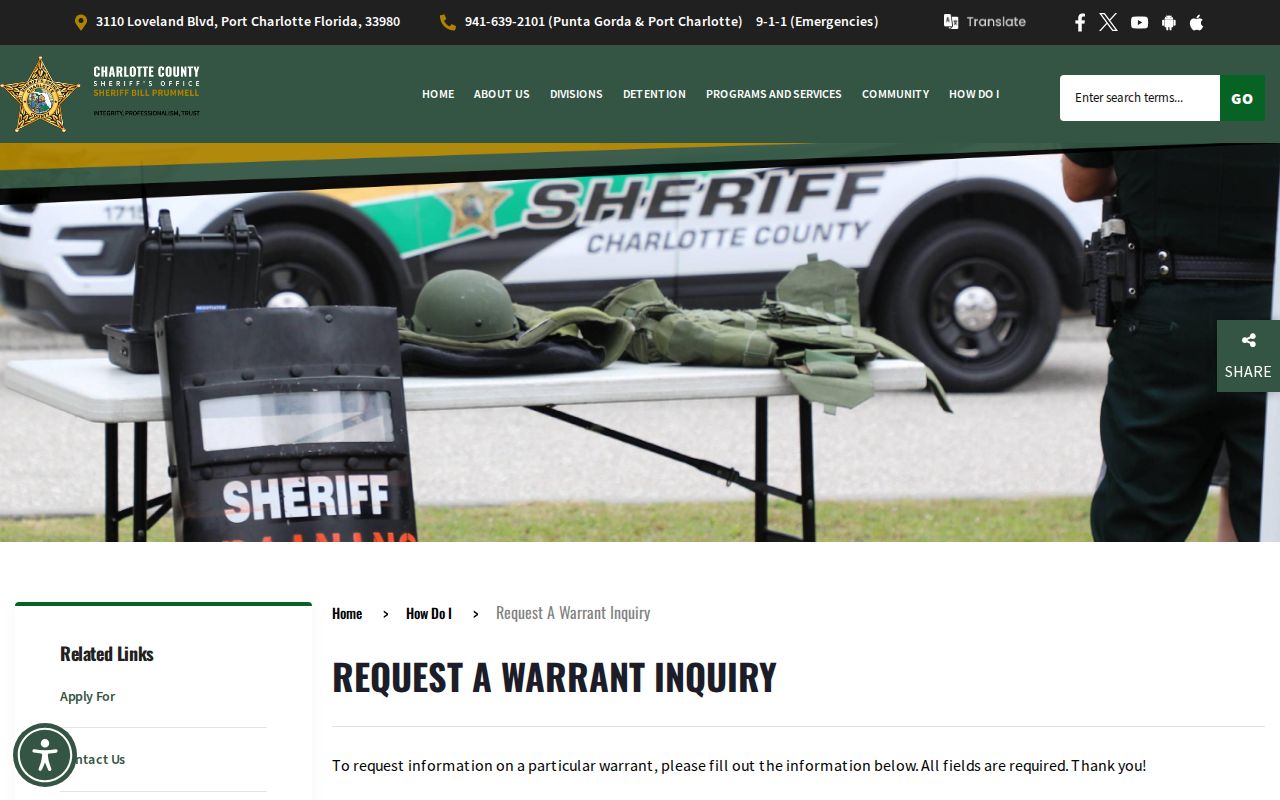
A delayed web response is not the safe tool for urgent resolution of one's own possible warrant. Confirm through counsel or directly with the court and sheriff.
CCSO also maintains a wanted-information page with agency contact routes.
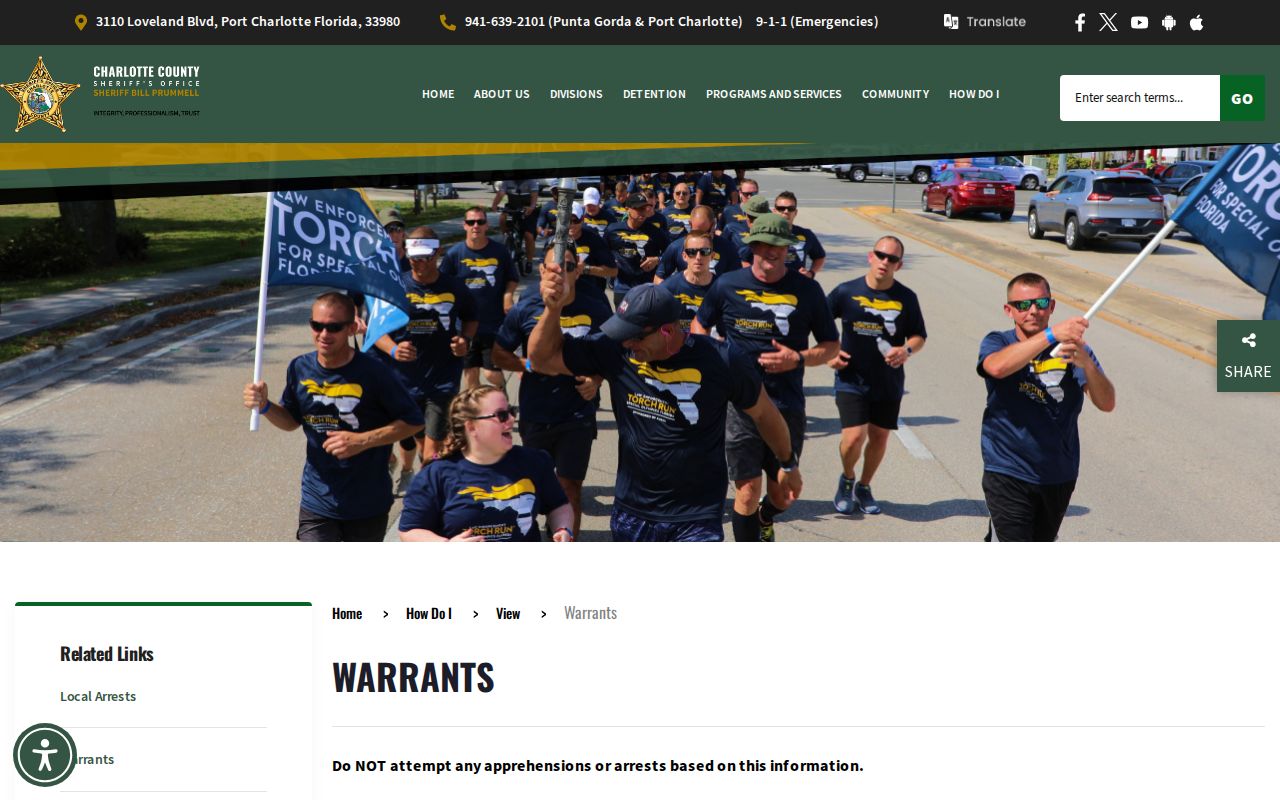
Public wanted information can be delayed or withheld, so a missing listing does not establish that no warrant exists.
What a Charlotte County Criminal Record Shows
A complete record can connect identity, arrest, charges, outcome, sentence, and later custody or supervision. Yet each source exposes only part of that chain. Read each count on a Clerk docket because one case can contain different outcomes. “Adjudication withheld” is not an acquittal. “Nolle prosequi” means the prosecutor ended a charge, while “no information filed” means no formal charge was filed.
| Name & Identifiers | Names and aliases, birth date, physical descriptors, local number, SID, or FBI number where authorized. |
|---|---|
| Arrest / Booking Data | Agency, arrest date, booking event, alleged charges, bonds, and custody dates. |
| Charges & Statutes | Filed counts, degree, statute references, and changes from the booking allegations. |
| Disposition | Outcome for each count, such as guilty, withheld, dismissed, acquitted, nolle prosequi, or pending. |
| Sentence | Jail or prison, probation, financial obligations, restitution, and other court conditions. |
| Custody / Supervision | Current or historic state incarceration, community control, probation, or release status. |
A certified final order controls over a summary screen. Compare it with FDLE when a disposition appears absent from the state history.
Tracking Charlotte County State Custody
Charlotte County Jail holds local pretrial detainees and people serving qualifying county sentences. After transfer to state prison, public location and supervision information moves to the Florida Department of Corrections. FDC Offender Search can show identifying details, inmate or supervision status, current location, release information, sentence dates, and aliases where available.
The FDC Offender Search is the official state prison and community-supervision locator.
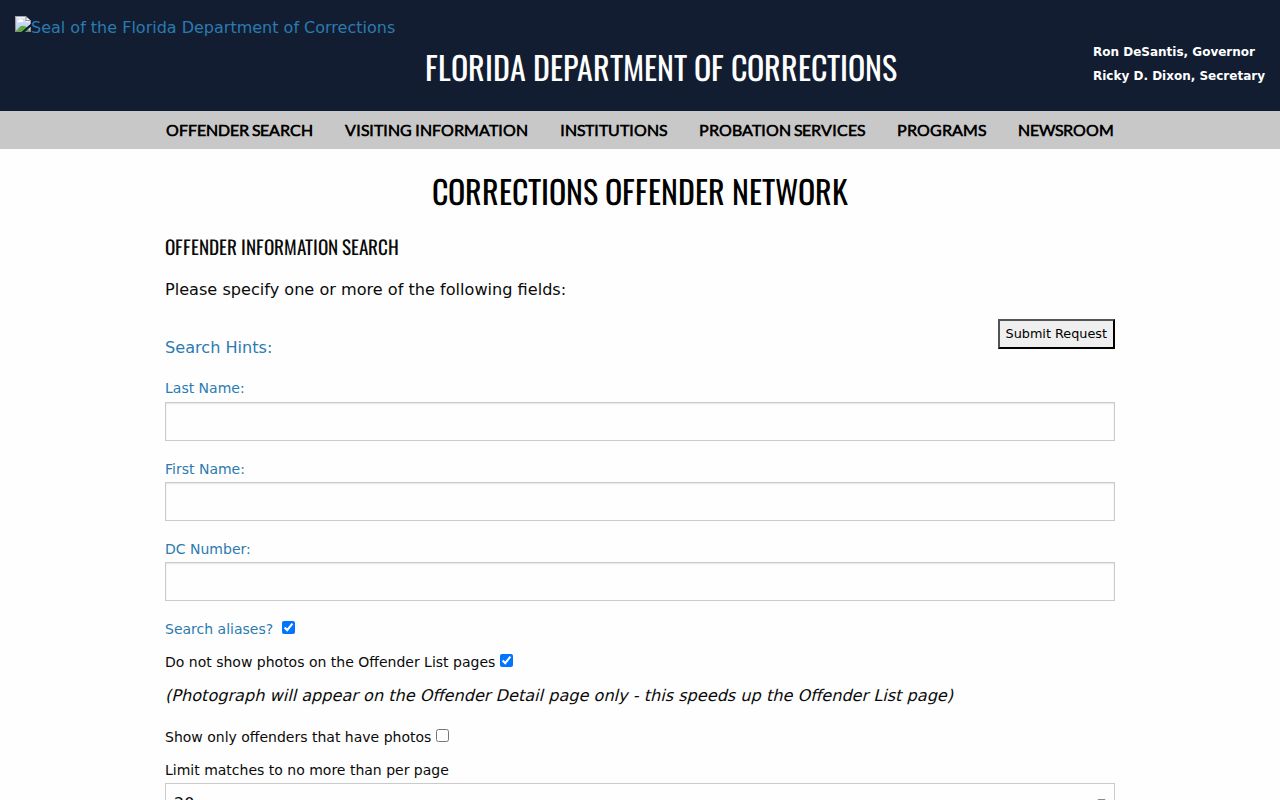
An old sentencing entry alone does not prove active supervision. Check FDC status and the Charlotte County docket for termination, modification, transfer, violation, or revocation events.
Adult probation and community control are state-run through FDC. Parole decisions belong to the Florida Commission on Offender Review, while FDC performs field supervision. Juvenile probation is handled by the Florida Department of Juvenile Justice.
Public Access Laws
Florida Public Records Law makes many Charlotte County records open for inspection and copying, but it contains significant exemptions. Active criminal intelligence and investigative material may remain exempt until the matter becomes inactive. Agencies also protect juvenile information, qualifying victim identities, confidential sources, account and Social Security numbers, protected addresses, and private body-camera settings.
Key Florida laws:
Florida Statutes §119.07 gives access at reasonable times and requires a withholding custodian to cite authority.
Florida Statutes §119.071 sets major investigative, personal-data, and body-camera exemptions.
Florida Statutes §119.0714 addresses protected personal information in court records.
Florida Statutes §119.105 confirms police reports are public unless confidential or exempt.
Florida Statutes §943.053 governs FDLE dissemination and public criminal-history fees.
CCSO accepts requests through JustFOIA, its contact route, or mail to the records custodian at 3110 Loveland Boulevard, Port Charlotte, FL 33980. Its public inspection window is 8 a.m. to 5 p.m. An ordinary Chapter 119 request generally does not require a reason.
Charlotte County Justice Center Records
The Charlotte County Justice Center at 350 E. Marion Avenue in Punta Gorda concentrates Clerk Court Services, Court Administration, the State Attorney, Public Defender, Pretrial Services, court security, judicial chambers, and courtrooms. The Clerk line is 941-637-2335. Court Administration lists weekday hours from 8 a.m. to 5 p.m. and free parking on the west side in front of the building.
An in-person visit requires planning. Security bars weapons, tools, razors, pepper spray, handcuff keys, aerosol cans, laser lights, and all liquids, even unopened water. The historic courthouse on Taylor Street is a different civic building. Clerk satellite offices also operate in Murdock and, on a limited schedule, at the West County Annex in Englewood.
Charlotte County Clerk
350 E. Marion Ave., Punta Gorda, FL 33950
941-637-2335
Court files and official copies
Charlotte County Sheriff
3110 Loveland Blvd., Port Charlotte, FL 33980
941-639-2101
Reports and records requests
Charlotte County Jail
26601 Airport Road, Punta Gorda area
941-833-6300
Bookings and county custody
Benchmark remains available before an in-person trip. Its search modes are All, Name, Case Number, and Citation Number. Enter a name as “Last, First.” Optional opened and closed date ranges can reduce a long result list. For a criminal search, select felony and misdemeanor first, then add traffic, infraction, county ordinance, or municipal ordinance when the event may fall in one of those groups. A displayed case can include the case number, parties, filing and closing dates, status, docket events, hearing calendar, case type, and disposition.
Online data is informational. The Clerk states that official documents control. Readers who need a certified or archived record may use the Clerk-linked eCertified service or contact Court Services. That distinction matters when a web status is brief, when each count needs its own outcome, or when a later order changes the result shown in an older copy.
Sealed, Expunged & Restricted
Florida court-ordered sealing and expungement starts with an FDLE Certificate of Eligibility. The certificate does not clear a record or guarantee relief. It permits a petition, and the Charlotte County court retains discretion. FDLE reports typical certificate processing of 12 weeks and does not expedite it. The nonrefundable certificate application fee is $75.
The FDLE relief overview explains the official sealing and expungement routes.
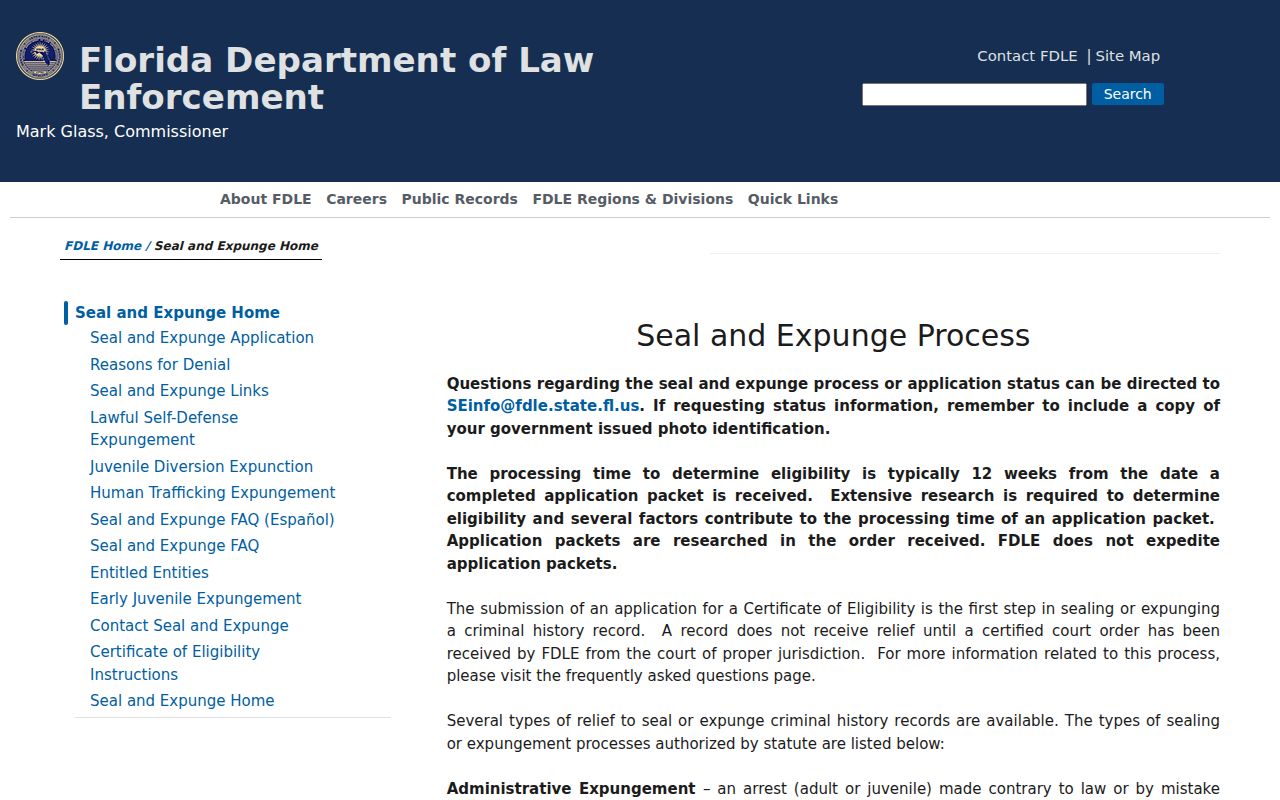
Applicants need exact arrest and case details, certified dispositions, fingerprints, and required proof of supervision or diversion completion. Expungement also requires prosecutor certification.
A sealed record stays visible to listed government and related entities. An expunged record usually returns only an expungement caveat to most such entities unless a court authorizes access. Automatic FDLE sealing does not seal local agency or court files. Keep certified records before relief and later verify both repository and local public views.
Correcting Charlotte County Criminal History
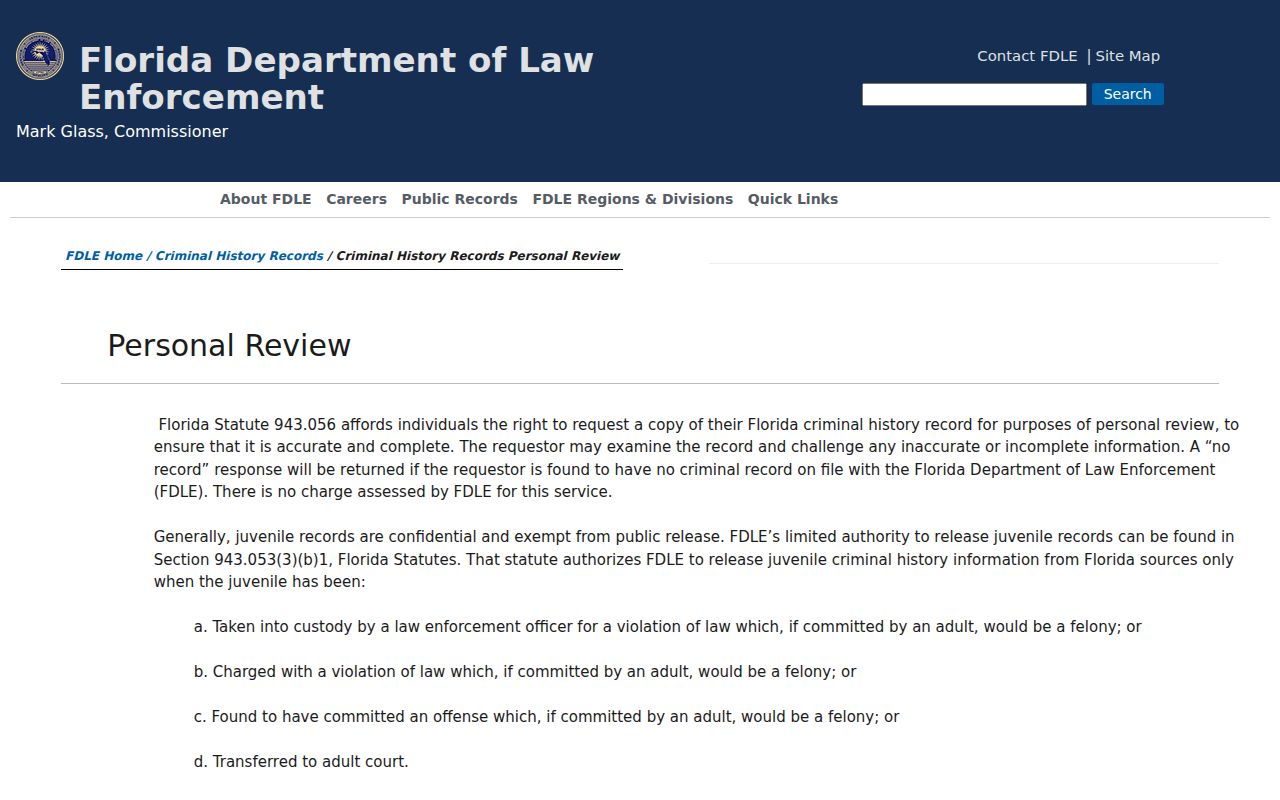
FDLE Personal Review is the stronger route for a person checking their own Florida identity history. It requires fingerprints and is available only to the subject or a designated attorney. FDLE charges no fee. The result is not a certified background product, but it supports a challenge to inaccurate or incomplete state information.
The FDLE Personal Review page gives the fingerprint and submission process.
Correction should start with the source of the error. A bad Charlotte County disposition belongs with the Clerk and supporting certified order; an arrest-data error may require the reporting agency. Then ask FDLE Criminal History Record Maintenance to update the repository cycle.
- Disposition
- The result of a charge. Each count can have a different outcome.
- Adjudication withheld
- A court withholds formal conviction. It is not an acquittal.
- Nolle prosequi
- The prosecutor ends a charge. The arrest does not vanish by itself.
- Arrest cycle
- One fingerprint-linked arrest and its associated charges and reported outcomes.
Federal Records Beyond Charlotte County
Federal charges do not appear as Charlotte County prosecutions. The county is assigned to the Middle District of Florida, Fort Myers Division. PACER holds federal dockets and documents, while the federal Clerk provides courthouse access. PACER charges $0.10 per page and caps many case documents at $3. Quarterly charges of $30 or less are waived, and judicial opinions are free.
The Middle District division map identifies Charlotte County's federal court route.
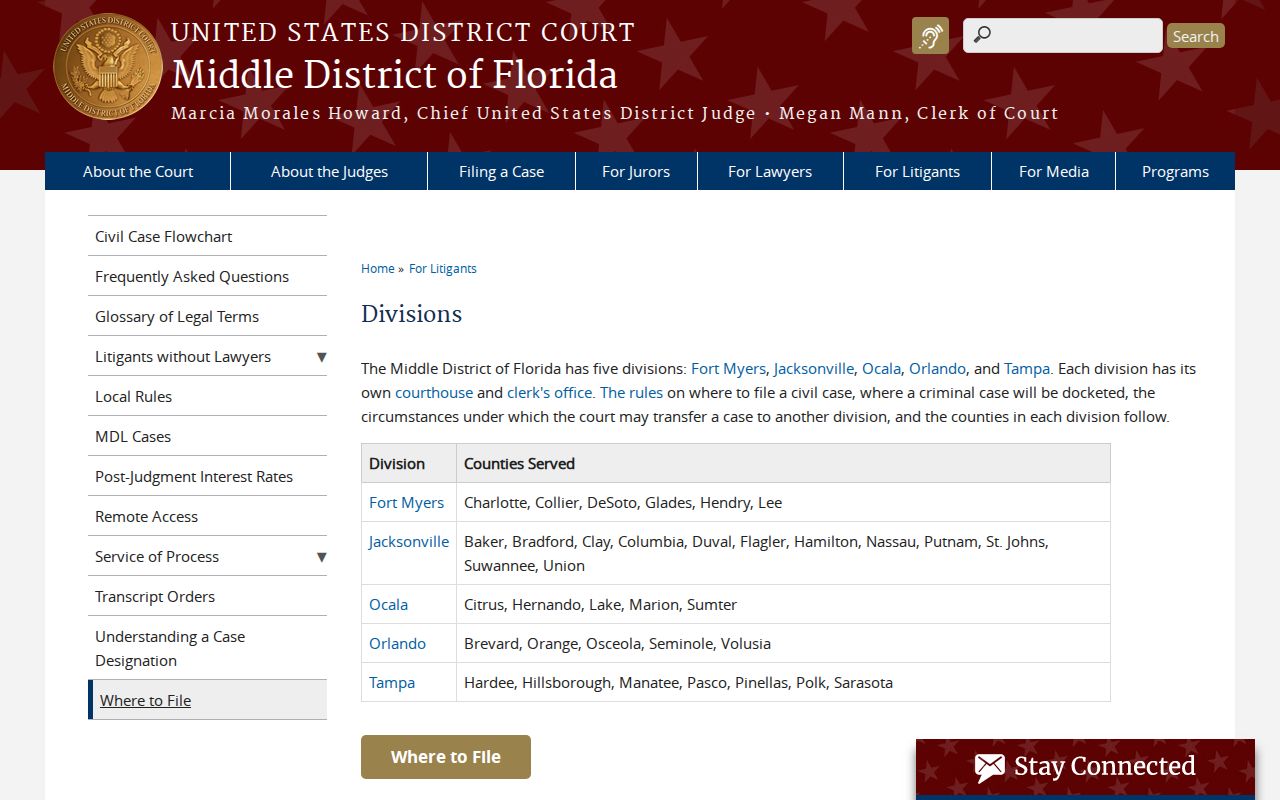
The federal layer also has separate custody and identity products. The Bureau of Prisons locator covers 1982 to the present. The FBI Identity History Summary is a subject-only fingerprint product, not a substitute for local court documents.
Criminal Records by City in Charlotte County
Punta Gorda is Charlotte County's only incorporated municipality. Port Charlotte and Englewood are communities, not cities with their own police departments or municipal courts. Outside Punta Gorda, CCSO is generally the local law-enforcement route. Within the city, Punta Gorda Police accepts its own incident-report requests, but all city arrests are booked at Charlotte County Jail and prosecutions go to the county Clerk and courts.
Punta Gorda Criminal History
20,383 residents · City police reports begin with PGPD; bookings and cases move to county offices.